

About Go-Greenovate
The Go-Greenovate campaign is Hong Kong Design Institute’s new initiative that aims to create a sustainable, eco-friendly learning environment, as well as to promote sustainable practices among students and staff through innovative and forward-thinking approaches.
The team Go-Greenovate combines ‘Green’ which represents sustainability, and ‘Innovate’ which represents creativity and innovation. The campaign encourages HKDI staff, students, and the surrounding community to work together towards a common goal of reducing waste across various platforms. It showcases how creativity and resourcefulness can be used to develop greener solutions for learning, teaching, and design commercialization.
Projects
"Redressing the Lion Dance" Exhibition and Lion Heads upcycling workshop (Feb 2026)


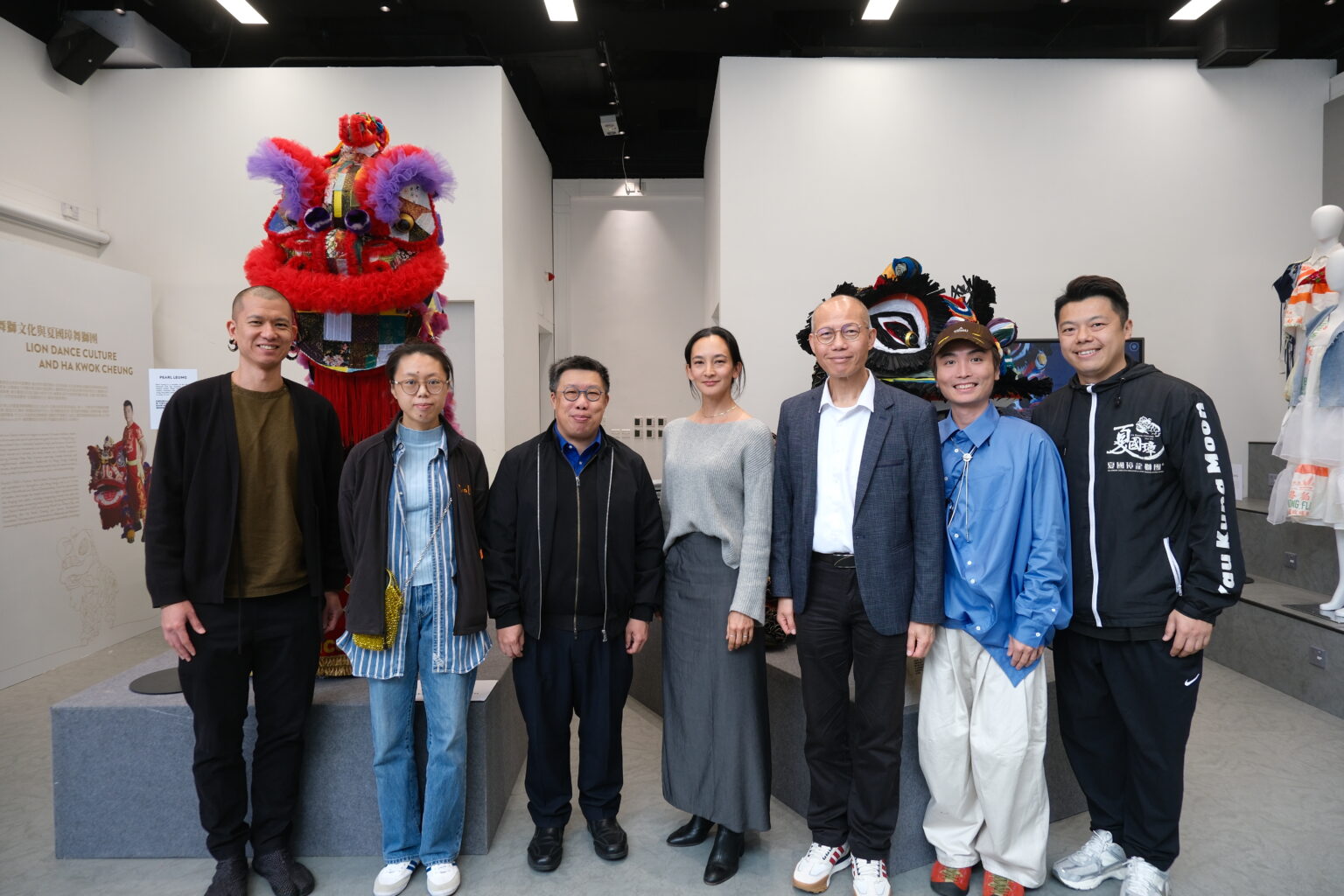
"Redressing the Lion Dance" at the Hong Kong Design Institute (HKDI) is an initiative that brings together cultural heritage and sustainable fashion to promote eco‑friendly, creative practice.
Local sustainable designers Pearl Leung (gong1long4coi4zeon6) and Eric Wong (Absurd Laboratory) have transformed garments deemed unwearable by the Clothing Collection Programme through redesign and upcycling, embedding circular design into the cherished ritual of the lion dance. The project demonstrates how waste reduction, material reuse and design innovation can create visually compelling costumes that honour tradition while opening new pathways for heritage conservation and creative education.
By showcasing resourcefulness and creativity, the exhibition encourages HKDI staff, students and the wider community to rethink textile waste and explore greener approaches to cultural expression.
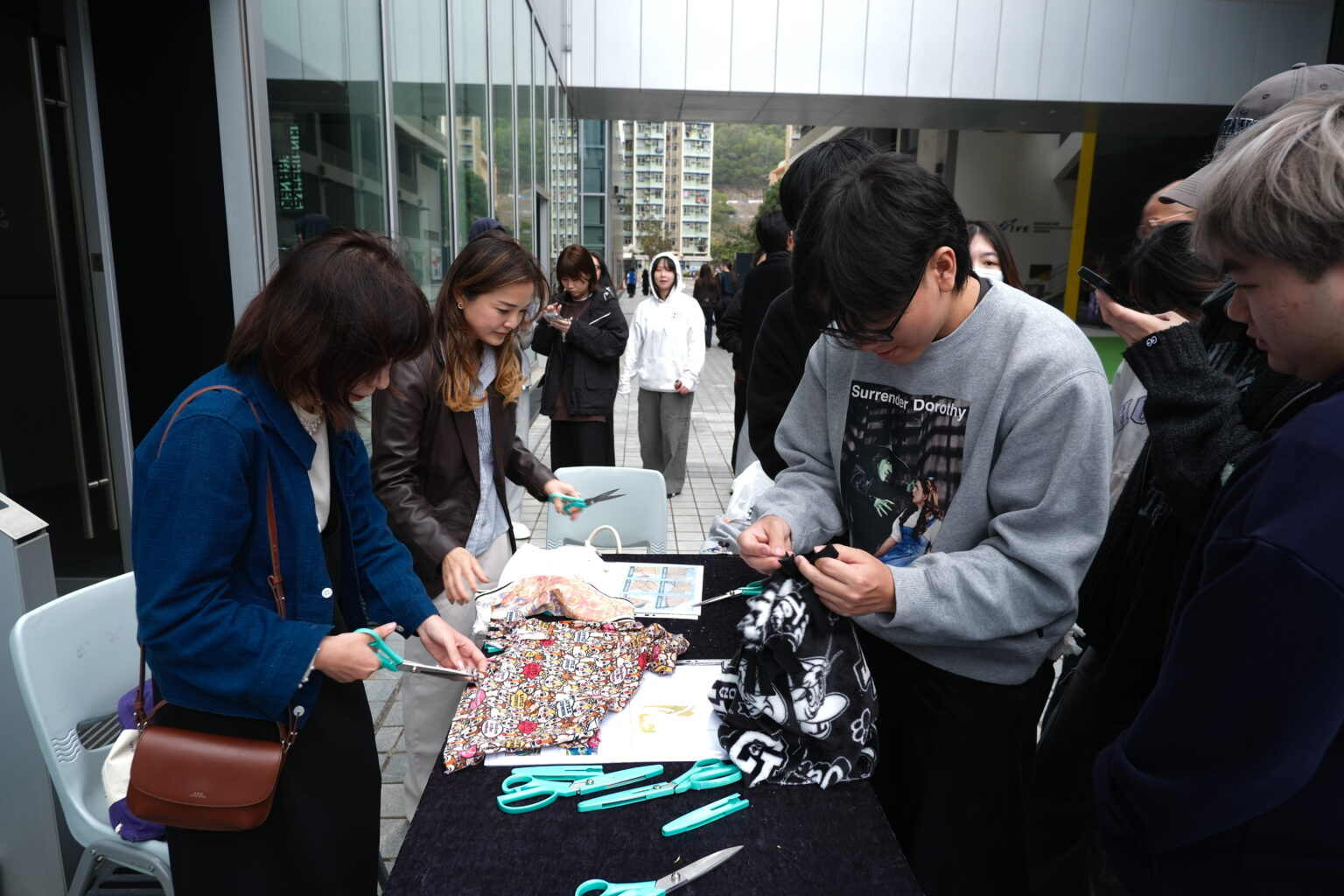
In addition to the exhibition, lion dance head design workshops were also held, aiming to allow students to personally experience how to utilize recyclable materials as design elements. Through this, we hoped to challenge their conventional design thinking and further cultivate their keen awareness of sustainable design. It is hoped that in their future design practices, students will also integrate upcycling concepts into their design thinking, thereby contributing to sustainable design.
HKDI PAVILION@Design Inspire (Dec 2025)


In December 2025, HKDI presented its booth at DesignInspire 2025 in collaboration with Senkoo. The booth was co‑conceived and designed with the HKDI DEEP (Event, Exhibition and Performance Set Design) teaching team.
Built entirely from high‑performance, recyclable paperboard panels, the booth employed traditional mortise‑and‑tenon joinery—without glues, screws, or edge banding—to minimize secondary pollution at the source. After the show, every component could be readily disassembled and recycled into new paperboard, delivering a zero‑waste, landfill‑free demonstration of circular design and advocating a leave‑no‑trace approach to exhibition making.
Beyond showcasing outstanding student work, the installation underscored the importance of sustainable design practices within the exhibition industry.
HKDI PAVILION@Design Inspire (Dec 2024)


Combining traditional craftsmanship with contemporary design as a reinterpretation of ‘material cultural heritage’, the HKDI Pavilion at DesignInspire 2024 focuses on the dialogue between technology and sustainability. Driven by the mission to promote sustainability in design, HKDI invited ANGUS TING, founder of local design brand 'Yiwooo', to share with students the artistic value and versatility of bamboo and collaboratively designed the art installation for the exhibition.
In local culture, bamboo symbolises elegance, resilience, vitality and flexibility. It is a traditional material commonly used in temporary buildings and traditional handcrafts such as the Lion and Dragon puppets. This exhibition's installation aims to explore new art forms that are inspired by the materiality of Bamboo. Taking inspiration from natural elements like plants and leaves, the artist and students co-created the artistic work in intertwined with bamboo and fabric, demonstrating the possibilities of material cultural inheritance whilst complementing the exhibition’s sustainability theme.
Furthermore, HKDI aims to promote the practice of reusing exhibition materials, advocating a leave-no-trace approach towards the exhibition setup. Therefore, all materials used in the exhibition—including plants, display racks, screens, and exhibits—are borrowed from the institute and will be reused afterwards at the institute or for future exhibitions.


Installation Design Team
Artist: Angus Ting (Yiwooo)
HKDI Tutor: Eddie Chan, Nelson Leung
Student Co-Creator:
Dorothy Chan, Janice Chan, Philippe Galang, Shantel Galang, Reo Wong, Sheena Wong, Leo Chan, Ben Lau, Yoyo Lo, Peko Li, Chiu-wai Ho, Lili Guo, Andrea Chan
Christmas Market (Dec 2023)


On December 15th, a Christmas market was held at Design Boulevard.
In addition to celebrating Christmas, the event also aimed to promote the concept of sustainable development, which HKDI has always supported. We were honored to have Mr. Wong Kam-sing, former Secretary for the Environment, in attendance.
The Christmas market showcased the "Circular Design" works created by local designers, HKDI tutors, alumni and students. There were busking performances, games, and a fantastic festive ‘Piu’ market. (‘Piu’ meaning ‘free exchange’ in Cantonese)
If you missed out or want more, don’t worry! Go-Greenovate will have more upcoming events, so be sure to stay tuned!
Creative Partners:
One Bite Design Studio, Green@Po Lam, &Dear, Gaau1 Up, Au Shu Kit
Collaborating Units:
Centre of Innovative Material and Technology (CIMT), HKDI Design for Social Innovation and Sustainability (DESIS) Lab, Centre for Design Services and Solutions (CDSS), Denim Fridays, HD in Visual Arts and Culture, Language Department
Mid Autumn Bazaar (Sep 2023)


The Mid-Autumn Bazaar was hosted on September 27 – 28 as a kickoff event of the Go-Greenovate campaign in 2023-24. A series of eventful activities such as live mural painting, busking, artist talk and our very first ‘Piu’ Market – a free-for-all exchange of books, clothes, stationery took place in the newly renovated student common room for students and staff to enjoy. Thanks to the Learning Resource Centre, the Student Development Office, for their contribution to the event's success.
GO-GREENOVATE Creative Workshop for DILWL Student Common Room (Aug 2023)


HKDI recently welcomed the Creator-in-Residence (CIR) team from Thats Yum Ltd. to conduct a series of workshops focused on sustainable living. The CIRs, who are behind the creation of Rooot HK, a restaurant and multi-purpose space that promotes sustainable and healthy lifestyles, worked closely with staff and students from several programmes including HD in Interior Design, Architectural Design, Illustration, Visual Communication, Fashion Design, Creative Media, and more.
The workshop aimed to apply circular design theory, utilizing upcycled materials found locally at our institute to design and fabricate the student common room. The workshop consisted of five stages, which involved empathizing and defining the problem, ideation, prototyping, production, and public engagement and feedback. The students shared their design expertise and underwent a co-creation process that integrated HKDI's learning and teaching methodologies with design thinking and project-based learning.
The workshop was a great success leading to a lively, eventful activity space we see today. HKDI’s Go-Greenovate Campaign will continue promoting sustainable living and innovation; We believe that through such workshops, we can forge sustainability and creativity for a better future.
Go-Greenovate Award 2023-24
Sustainability is increasingly gaining importance in improving our planet's future. In recognition of this, the Hong Kong Design Institute (HKDI) is launching a sustainable design campaign, "Go-Greenovate" to educate our students to become innovative sustainable designer for the future. The Go-Greenovate Award is one of the main activities to recognize and applaud the creativity and effort of the winners.
Objectives
To promote sustainable practices, raising awareness about environmental issues, and fostering creativity in design.
Theme and Scope
3 overall awards and 3 category awards were selected from around 50 nominations from the four departments of HKDI:
- Fashion and Image Design,
- Architecture, Interior and Product Design
- Communication Design, and
- Digital Media
The 3 categories are:
- Green Concept – promoting strong, innovative idea of a designed product, services, systems, etc.
- Green Process – emphasis on research and development process in sustainable design.
- Green Product – providing tangible green solutions to the real world.
Great thanks to our valuable sponsors and judging panel members, the Go-Greenovate Award 2023-24 concluded successfully with an exhibition opening and award ceremony on 19 June. Here are our winners and their outstanding projects:
Overall 1st Place: Situ Yupei (Interior Design) – Song Dynasty Life Culture Center
Overall 2nd Place: Leung Lok Yin, Kan Wai Pang, Fan Chun Kit, Wong Miu Lam (Advertising Design) – 「回收」係種態度
Overall 3rd Place: Chan Ka Yan (Visual Arts and Culture) – Appreciation of Nature
Green Concept: Che Lok Yin, Tsui Pui San, Li Fu Chun, Law Kam Chuen, Tsang Yong Zhi (Architectural Design) – Wooden Megasketcher
Green Process: Chow Ming Hei (Interior Design) – The Flash of Inspiration
Green Product: TANG WAI SHAN (Visual Arts and Culture) – Intangible Cultural Heritage
Exhibition and Competition Sponsors:


What is Circular Design?
Circular design refers to an approach to product and system design that aims to minimise waste, maximise resource efficiency, and promote sustainability throughout the entire lifecycle of a product. principles of the circular economy, which seeks to move away from the traditional linear "take-make-dispose" model of production and towards a more regenerative and restorative system.
In circular design, products are designed with the intention of being reused, repaired, remanufactured, or recycled at the end of their lives, rather than ending up as waste. The focus is on designing for durability, ease of disassembly, and the use of renewable or recyclable materials. Additionally, circular design considers the optimisation of energy and resource consumption during the manufacturing, use, and disposal phases.
The goal of circular design is to create products and systems that contribute to a more sustainable and circular economy by reducing environmental impact, conserving resources, and minimizing waste generation. It emphasises the importance of closing the loop by keeping materials in circulation and avoiding the depletion of natural resources.
HKDI inspire* 2023: Reduce, Reuse, Recycle, Repair; Circular Economy and the doughnut model
This master lecture sheds light on consumer behaviour as we know it since industrialisation took command. We ask, what can design contribute to avoid “throw away” culture as it not only needs many resources, damage environment - it also kills jobs and cultures of repair. We have a look at much more social and environmental friendly circular economies where “reduce, reuse, recycle, repair* are the key values. From that point, we look at design and ask, what can design do, to consider these aspects already in the creative process and the follow up economic models. We also have a look at the “Doughnut Model” as a practical orientation model for industry, society, and creative economies.
Lecture by Prof Michael Krohn, Professor of Design and Co-Head of re-source | Sustainability in the Arts, Zurich University of the Arts, Switzerland
HKDI inspire* 2023: A circular and sustainable fashion world
This Master Lecture examines a variety of alternative paradigms to the current un-sustainable fashion status quo. This includes the concept of Earth-logic, circularity, usership instead of consumption and understanding green washing. We will discuss the question if we can afford to throw away garments and analyse the notion of trash-mentality as well as future material aspirations. By keeping in mind that the most sustainable garment is the one already in our wardrobe, we investigate the need to create systems that sustain creative endeavours for as many generations as possible.
Lecture by Isabela Gygax, Artistic-scientific Associate of re-source | Sustainability in the Arts, Zurich University of the Arts, Switzerland
HKDI inspire* 2023: The Art of Possible Futures
In a time of increasing crises, from economic to climate, from demographic to pandemic and war with global consequences, these events are changing the way we perceive and experience the world today.
The urgency and the quest for a more sustainable development of our society and environment have now become even more evident. Through the power of imagination, storytelling and speculation, artists and designers are crossing boundaries, collaborating with other disciplines, developing collective visions, and imagining possible futures and new ways of living. Through systemic thinking, transdisciplinary and transformative skills, some exemplary projects will be presented and discussed.
Lecture by Karin Zindel, Designer and Co-Head of re-source | Sustainability in the Arts, Zurich University of the Arts, Switzerland
What is Green Campus?
A Green Campus refers to the implementation of environmentally sustainable practices within a school campus, aiming to reduce environmental impact while enhancing the quality of life. This approach encompasses various aspects, including eco-friendly architecture, energy efficiency, waste reduction and recycling, sustainable transportation, and landscape planning.
Advantages of a Green Campus :
- Provide a healthy and comfortable learning environment.
- Enhance student focus and alertness through fresh air and natural lighting.
- Prioritize environmental protection and sustainability.
- Implement energy-saving, waste reduction, and recycling practices.
- Minimize resource consumption and environmental impact.
- Encourage students to interact with nature and foster environmental awareness.
- Offer ample outdoor spaces for physical activities and exploration.
- Promote overall well-being while contributing to environmental conservation.
Student Common Room


In July 2023, HKDI Go-Greenovate organised a month-long workshop that transformed the former canteen into a dynamic student common room. Led by resident creators and instructors, this collaborative effort involved 60 students from various disciplines including Architecture, Interior and Product Design, Communication Design, Digital Media, Fashion, and Image Design.
Drawing inspiration from sustainable and recycled materials, as well as innovative design concepts, the participants embarked on an interdisciplinary journey, infusing colourful hues and lively textures into the space. This unique fusion of creativity and environmental consciousness shaped a unique activity space for all HKDI members to enjoy.
Wellnes Garden (LWL 2/F)


In July 2024, the Green Garden on the 2nd floor of HKDI's Lee Wai Lee Building was certified by the Green Power - Fung Yuen Butterfly Reserve, officially becoming one of the accredited butterfly gardens in the International Butterfly Network.
The butterfly garden is planted with a variety of nectar plants favored by butterflies and food plants for caterpillars, providing a long-term habitat for butterflies and promoting biodiversity.
Under the guidance of instructors, students exercised their creativity by ingeniously transforming various recycled materials and incorporating them into the landscape design, adding a unique aesthetic to the butterfly garden. 
Podium Garden (Block C 1/F, Block A 2/F)


Located at Block C 1/F and Block A 2/F of HKDI, the podium garden is a haven of tranquility and natural beauty. With numerous plant types on display, this vibrant oasis offers a delightful breakout space.
From colorful flowers to lush green foliage, the garden provides an enchanting environment for relaxation and embracing nature's wonders.
Roof Garden (9/F)


Located on the 9th floor of HKDI, the roof garden provides various green pockets around the beautiful architecture features with a stunning panoramic view of Tseung Kwan O. It is an HKDI hotspot for all kinds of photoshoots and videos.
Green Facilities
Smart Locker


The Smart Locker at HKDI LRC is a convenient and efficient item loan service designed exclusively for students. With a user-friendly interface, students can easily borrow various items, such as books, laptops, and computer equipment, at any time. The system streamlines the borrowing process, ensuring quick accessibility and enhancing the overall convenience for students.
Book Crossing
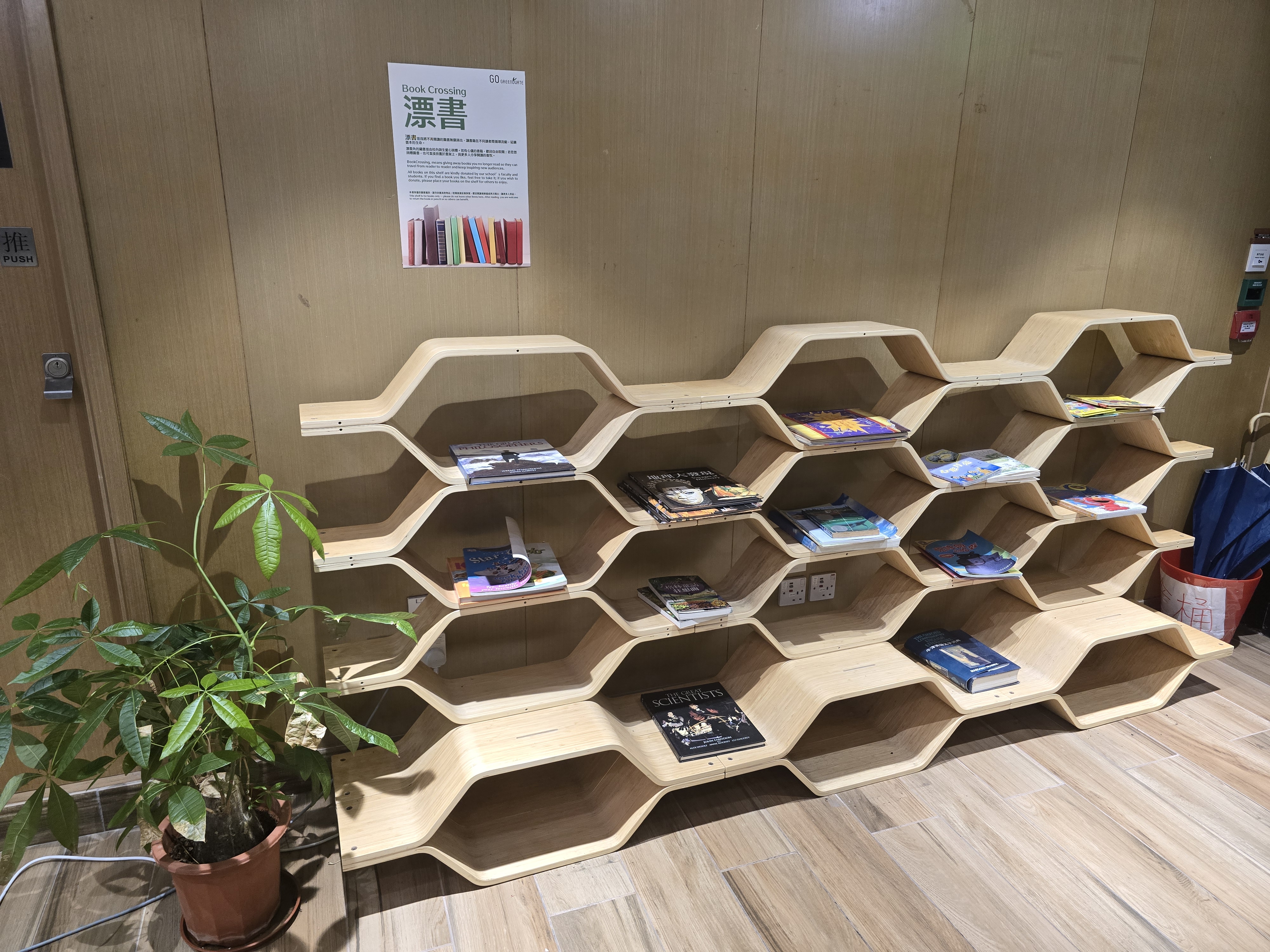
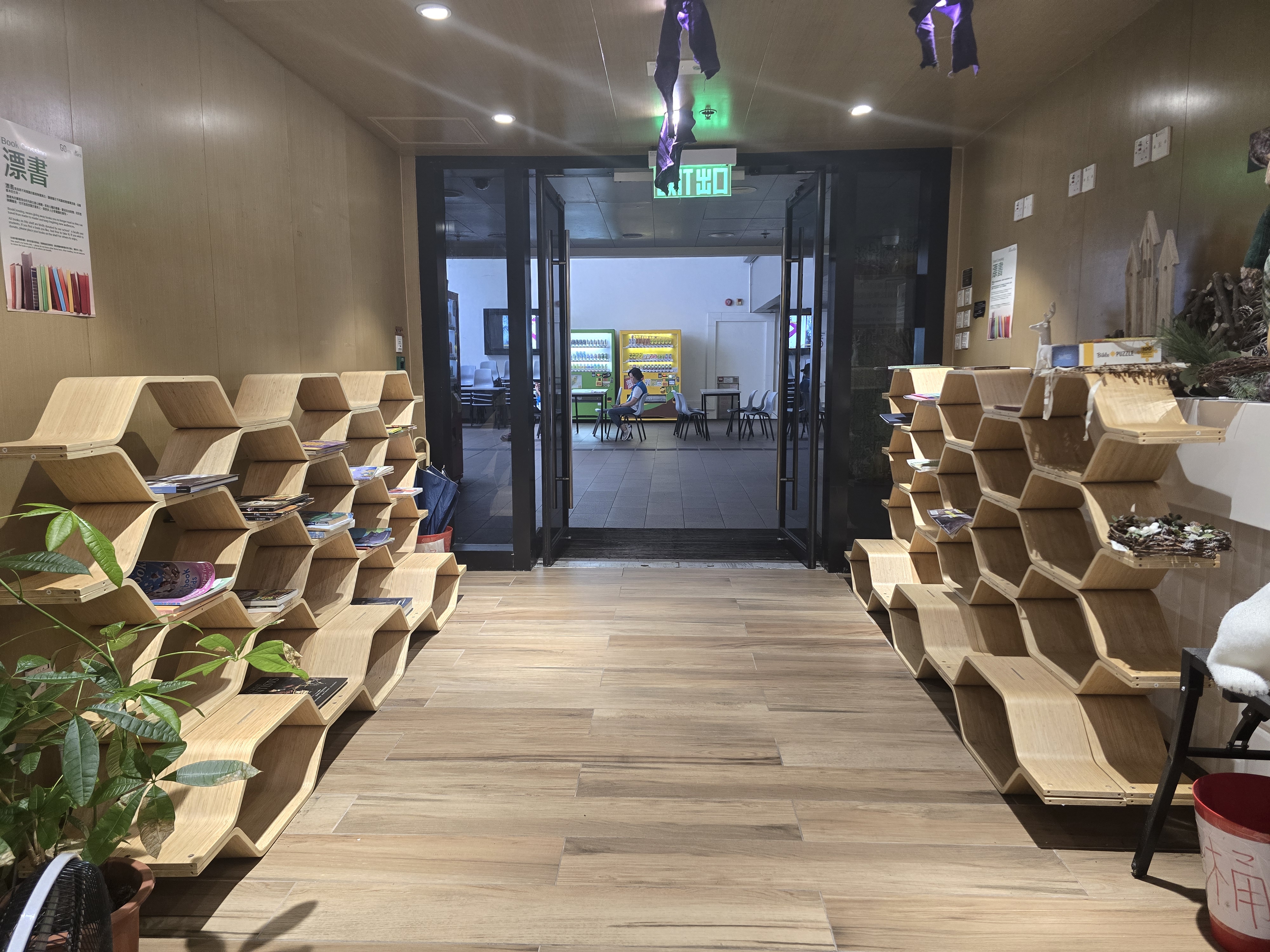
Inside the student canteen, there is a corner dedicated to Book Crossing. It houses a collection of donated books from various sources, including students, teachers, and the library. Students can freely borrow books from this collection, and once they have finished reading, they can contribute to the cycle by returning the books for others to enjoy. This practice not only allows for the extension of these books' lifespan but also promotes the concept of book sharing among the school community.
The Piu Market is a HKDI sharing platform promoting recycling, redistributing and reusing useful resources amount students and staff. We regularly collect material donations such as design books, stationery, clothes, artefacts and even plants from teaching units and teachers and share amount all HKDI members at the Piu Market. ‘Piu’, which means free flowing in Cantonese encourages sharing with others.
To give or to receive? Why not both?
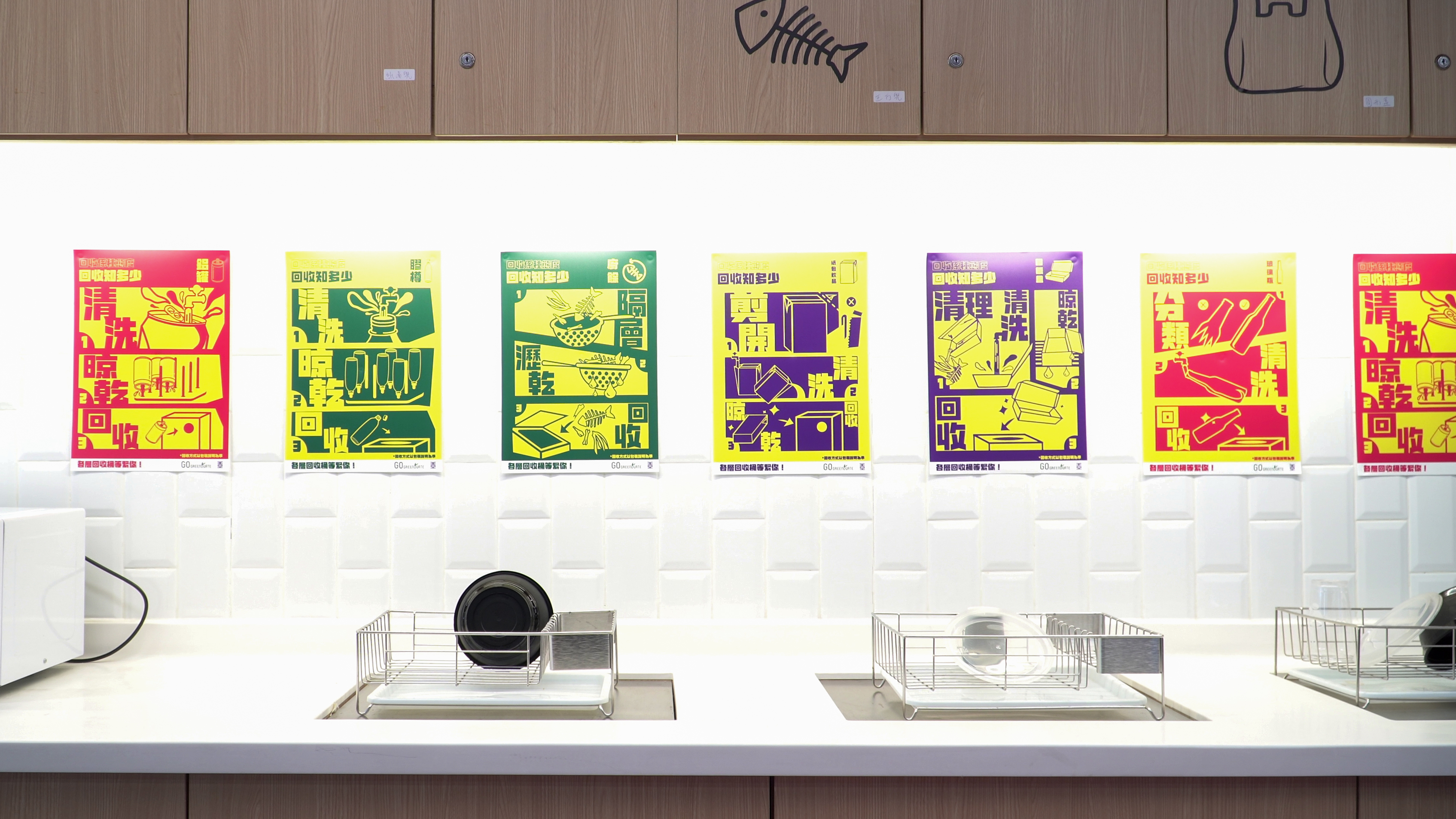
In 2025, Go Greenovate partnered with CESDO to create HKDI’s first “Green Corner.”
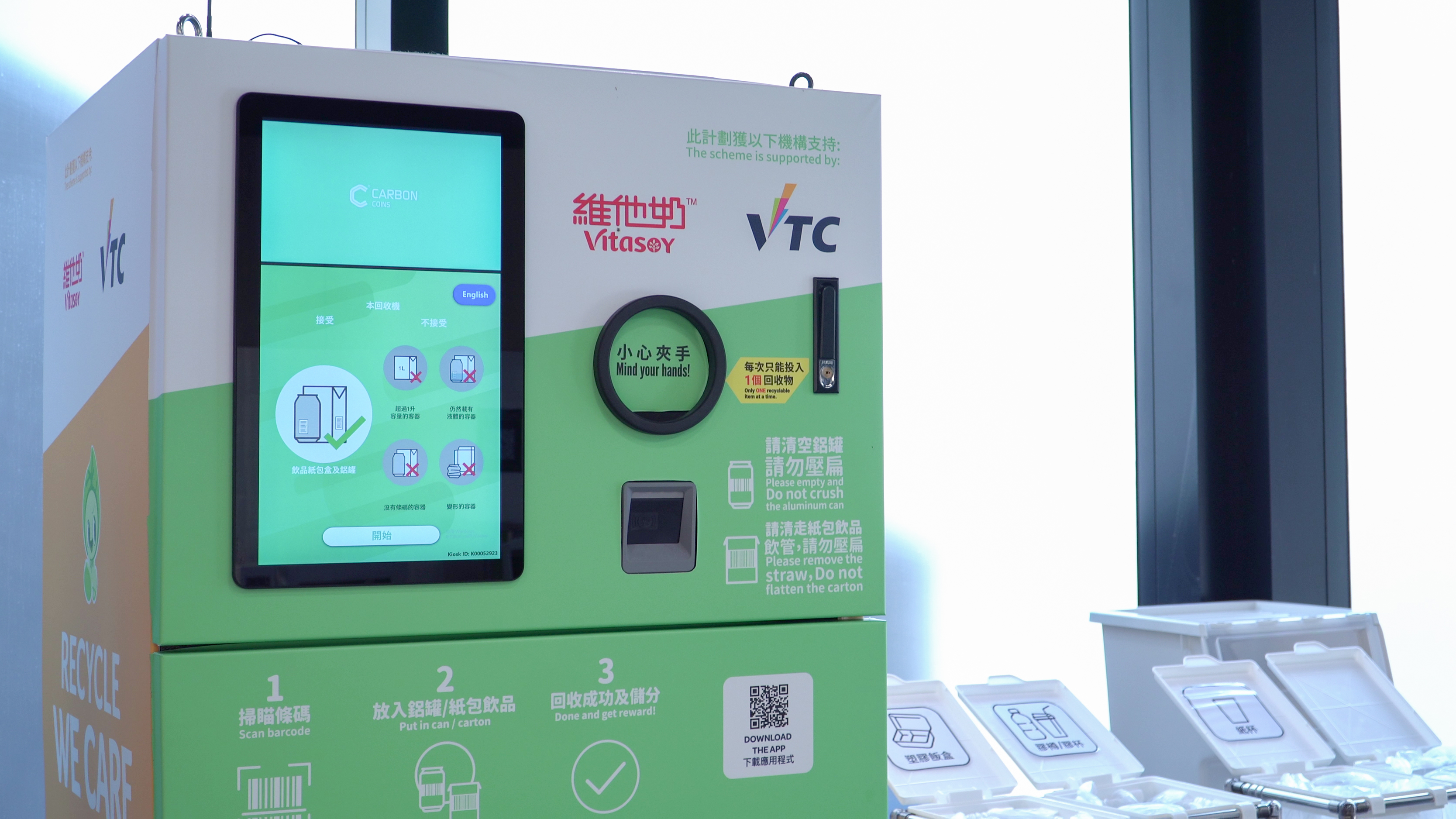
The Green Corner showcases the design “Recycling – Built on Attitude,” which won overall 2nd prize in the first Go Greenovate Awards. By combining this student designed recycling system with CESDO’s environmental approach and installing it in the student canteen, the team created a clear, organized recycling station. The design focuses on user experience, giving students a more convenient way to recycle, improving post lunch sorting and food waste disposal, and bringing circular design principles into everyday campus life.
A food waste processor has also been installed outside the student canteen. The school works with two on campus food vendors to collect and recycle food waste. The processed material is turned into fertilizer for the campus’s green areas and wellness garden, helping extend the green campus initiative across the institution.
Upcycling Corner

FOR HKDI STUDENTS & STAFF ONLY
In the Upcycling Corner, students can find free materials like fabrics and wood for their creative projects.
Applicants will be notified by email within a week regarding the approval of their application. Once approved, they can collect the items from the workshops during office hours.
For more information of the materials and the application form: Click Here
What is Upcycling?
Upcycling is the process of transforming waste materials or unwanted items into new products of higher value or quality. Unlike recycling, which breaks down materials to create new ones, upcycling focuses on creatively repurposing existing materials to give them a new life and purpose.
Upcycling can be applied to various materials, including textiles, furniture, glass, plastic, and more. For example, old fabric scraps can be turned into unique patchwork quilts or fashion accessories, while discarded wooden pallets can be repurposed into stylish furniture or garden planters.
Advantages of Upcycling
The essence of upcycling lies in finding creative solutions to repurpose materials that would otherwise end up in landfills. It encourages resourcefulness, imagination, and sustainability by extending the lifespan of materials and reducing the consumption of new resources.
Not only does upcycling contribute to waste reduction and conservation of resources, but it also allows for the creation of one-of-a-kind, environmentally friendly products. It promotes a circular economy mindset, where materials are continuously reused and transformed, rather than being disposed of after a single use.